


Beyond the Symptom with Dr. Izabella Kogan: Why I Use Brain Mapping to Optimize Your Brain Health

Have you ever wondered what is actually happening inside your brain when you feel overwhelmed, unfocused, or simply exhausted?
In my clinical practice, many of the cognitive and mental health conditions I evaluate—including ADHD, anxiety, sleep deprivation, and cognitive decline—are primarily assessed through traditional clinical interviews, questionnaires, and behavioral tests. While these tools are essential parts of the puzzle, they don’t always reveal the full picture.
That is why I use brain mapping—scientifically known as quantitative EEG (qEEG)—at The Queens Med Spa. It gives us an objective, window-like view directly into your brain's electrical activity.
What Exactly is a Brain Map?
Think of a qEEG as a blueprint of your brain's communication network. By reading the electrical signals at the surface of your scalp, a quantitative EEG tracks the distribution and balance of your core brain-wave frequencies:
Delta & Theta: Your slower brain waves, heavily involved in sleep, relaxation, and deep processing.
Alpha: The bridge between your conscious and subconscious mind, associated with a calm, restful focus.
Beta & High Beta: Your faster brain waves, active during problem-solving, high-level processing, and logical thinking.
Gamma: The fastest waves, linked to high-level information processing and cognitive function.


Fig 1. 66 y old lady with cognitive impairment before and after photomodulation. Noticeable reduction in Theta wave prevalence ( orange color indicates 2 deviations above normative range)
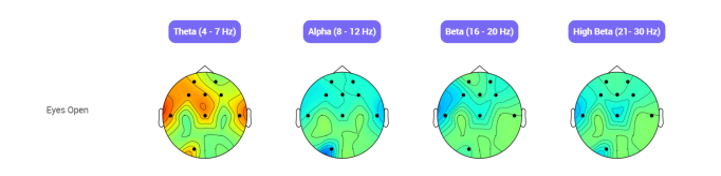

Fig 2. 15 y old M, with ADHD before and after photomodulation and neurofeedback treatment
We take this real-time data and compare it with normative databases. If certain frequencies are significantly out of balance in specific regions of the brain, it can point to the root causes of attention difficulties, persistent anxiety, poor sleep quality, or age-related cognitive changes.
The Power of Tracking Real Change
One of the most profound benefits of brain mapping isn't just the initial assessment—it's the ability to objectively monitor your progress over time. Instead of relying entirely on a subjective sense of "how you feel" from one appointment to the next, we can physically see how your neural pathways are adapting.
We use these maps to guide and measure advanced, non-invasive therapies like neurofeedback and photobiomodulation.

Real Case Studies From Our Practice:
Addressing Cognitive Decline: We worked with a 66-year-old patient experiencing cognitive difficulties. Her initial brain map showed a massive increase in slow-wave activity, with her theta waves peaking at roughly twice the level of the normative population (indicated by the bright orange colors in Figure 1). Following a customized course of photobiomodulation treatment, her follow-up scan showed a striking reduction in that excess theta activity, successfully shifting her brain waves back into the expected healthy range.
Rebalancing the Brain in ADHD: In another case, a 15-year-old boy struggling with ADHD exhibited stark imbalances across his brain-wave spectrum (Figure 2). After completing a targeted regimen of neurofeedback, his subsequent brain map revealed a far more harmonized, balanced pattern. Even better, his day-to-day focus and attentional performance improved substantially.
A Gym for Your Brain
This brings us to neurofeedback, a modalities-based technology that I find absolutely fascinating.
I frequently describe neurofeedback as a gym for the brain. Just as you hit the gym to build physical strength, cardiovascular endurance, and flexibility, neurofeedback is a specialized form of brain training designed to foster self-regulation, cognitive resilience, and processing efficiency. By continuously feeding your brain real-time data about its own electrical output, it gradually learns to self-correct and self-regulate into healthier patterns.
Research and my own clinical experiences show that neurofeedback can help:
Sharpen attention and concentration
Support long-term memory and cognitive longevity
Calm the nervous system to minimize anxiety
Optimize overall mental and executive performance
Because every single brain is unique, the specific advantages will vary from person to person. This is exactly why a personalized, map-guided evaluation is so fundamental to what we do. In fact, I am such a firm believer in this technology that I perform my own brain maps every few months and use neurofeedback consistently for my own cognitive performance optimization.
Holistic Longevity at The Queens Med Spa
What I love most about these neuro-technologies is that we aren't simply trying to mask or suppress a symptom. We are actively empowering your brain to construct more efficient, healthier, and more resilient pathways of functioning.
While these advanced modalities are not a blanket replacement for essential medical care, they serve as a powerful, data-driven pillar of preventative wellness. Our ultimate goal at the Queens Institute of Skin Disease and Anti-Aging right here in Thornton is to help you maintain vibrant brain function, sharp cognitive performance, and a beautiful quality of life as you age.
Disclaimer: The information provided in this blog post is intended for educational purposes only and does not constitute personalized medical advice, diagnosis, or treatment. QEEG and neurofeedback protocols are designed to complement individualized care plans under professional guidance.
In Health,
Dr. Izabella Kogan MD, PhD, CCFP
Member of The American Anti-Aging Society
The Queens Institute for Skin Disease and Anti-Aging
238 Barrie Street
Thornton, Ontario
705 250-9544



Comments